
Johnson County Criminal Court Cases
Johnson County court records split by jurisdiction. Superior Court has exclusive authority over felony trials and sits in the Dublin Judicial Circuit. Magistrate Court handles warrants, first appearances, preliminary matters, and misdemeanor or county-ordinance work within its authority. Wrightsville Municipal Court keeps its own city ordinance and qualifying traffic or misdemeanor matters. The Johnson County Clerk of Superior Court manages Superior, Juvenile, and Magistrate records, while juvenile files are generally restricted.
The filed case is different from the jail entry. A booking table states the charge received at intake. The Dublin Circuit District Attorney may later pursue an accusation or seek an indictment with different wording. Only the court file follows those filed charges through motions, plea or trial, judgment, and sentence. Readers moving from a jail result to the final outcome should use the Johnson County arrest lookup for custody context, then obtain the clerk docket.
Johnson Felony Files on East Elm
The Johnson County Clerk of Superior Court is at 2557 East Elm Street, Wrightsville, GA 31096, with PO Box 321, phone 478-864-3484, and fax 478-864-1343. The GSCCCA clerk profile places the office on the courthouse first floor. County information lists weekday hours from 8:00 a.m. to 5:00 p.m.; GSCCCA lists 9:00 a.m. to 5:00 p.m. Call before traveling because the sources conflict.
The county’s official clerk page shows the record office that anchors Johnson County criminal cases. That source also makes the physical courthouse the dependable starting point when no online docket exists.
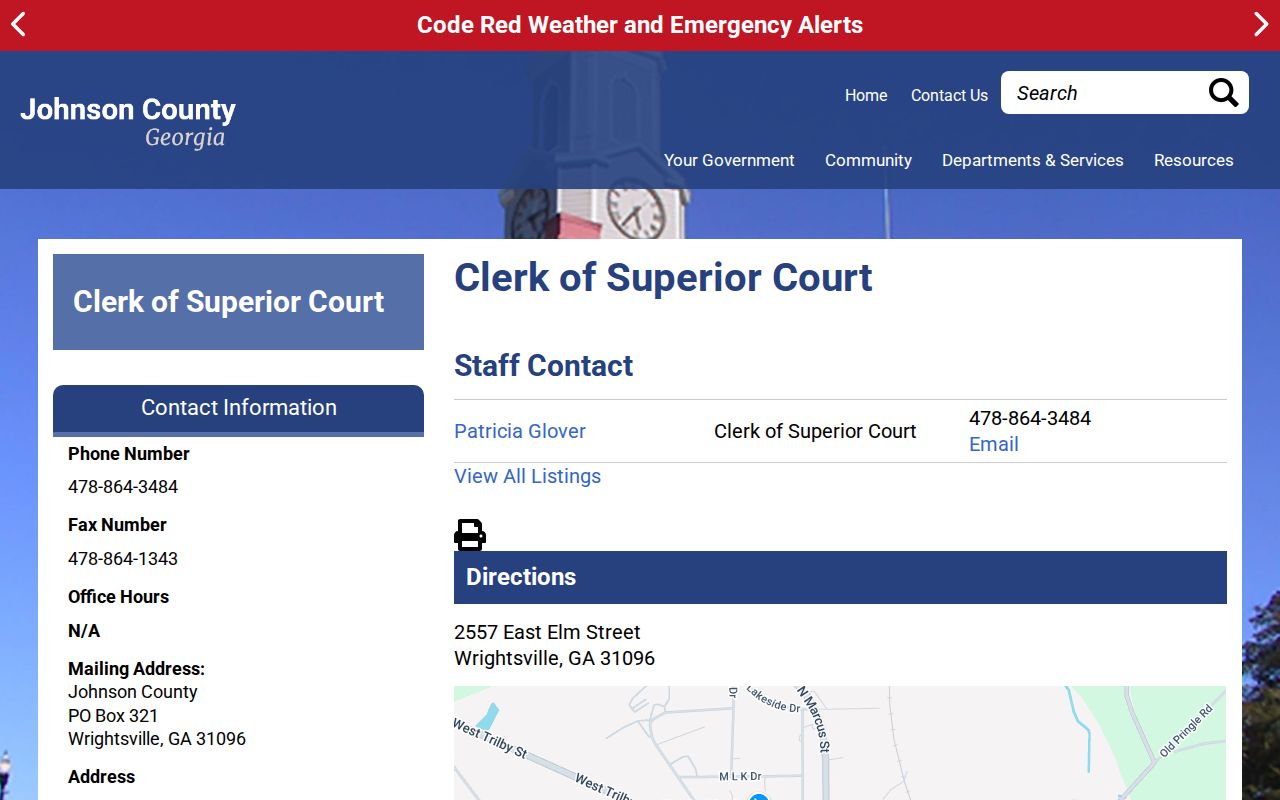
The image reinforces the clerk’s role as the custodian for filed local criminal cases, rather than arrest or prison records.
Searching Johnson County Case Records
There is no free, unified Johnson County criminal case database. The Georgia court e-access directory routes users to participating systems and may require an account, but Johnson County cases must presently be requested from the clerk. Use this direct workflow:
- Identify the court from a citation, warrant, roster court label, or prior paper.
- Call 478-864-3484 with the full name, likely filing year, and case number if known.
- Ask whether the index shows an active, archived, sealed, or juvenile file.
- Request the docket and the exact document needed, such as an accusation, indictment, judgment, or sentence.
- Ask for a copy quote and choose plain or certified copies, then preserve the receipt and certification.
The clerk states that it does not correspond by email. Ask whether a request may be made by mail, fax, or at the counter. No official Johnson copy price or online payment method was located, so confirm cost and delivery before ordering.
| Detail to provide | Format | Why it helps | Local limit |
|---|---|---|---|
| Full party name | Text | Starts an index search | Same-name results need more context |
| Case number | As printed | Targets one docket | Formats vary by court |
| Approximate year | Four digits | Narrows active or archived files | Not a filing-date guarantee |
| Court or case type | Superior, Magistrate, Municipal | Routes the request | No public county selector exists |
| Document and certification | Plain or certified | Defines the copy order | Fee must be confirmed |
Johnson Clerk Channels Without Email
The official clerk directory listing names Patricia Glover and expressly says the office will not correspond by email. Phone is the best first channel, followed by the courthouse counter, mail, or fax as staff permits. Give a narrow request. A request for “all records” may be hard to identify, while a named case, date range, case number, and document type lets staff quote the work.
The directory image records that unusual access rule. Johnson County criminal court access relies more heavily on the clerk’s voice and counter channels than access in counties with public docket portals.
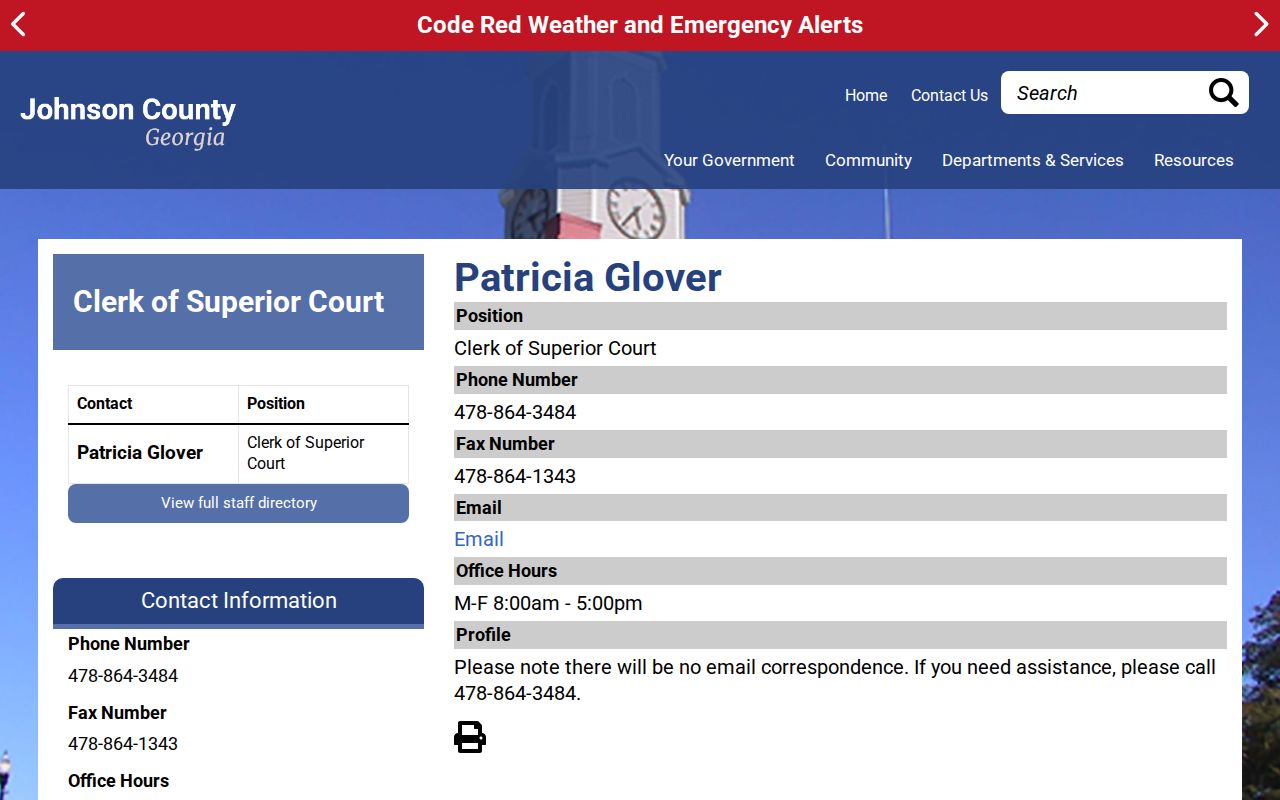
Callers should also ask which published counter hours apply before making a trip to Wrightsville.
Inside a Johnson County Case File
A clerk file is the record of what reached court, not every detail held by police or the jail. No public Johnson sample case was available for inspection. The inventory below therefore identifies typical clerk-file fields based on the documented court workflow, not fields promised in an online display.
| Case Number and Court | The filing identifier and the court with authority over the matter. |
|---|---|
| Charging Document | An accusation, indictment, citation, or other filed allegation. |
| Docket Entries | A dated log of filings, notices, motions, orders, and hearings. |
| Hearing Dates | Scheduled or completed arraignment, pretrial, plea, and trial events. |
| Disposition and Judgment | Dismissal, plea, verdict, or other final case outcome. |
| Sentence and Conditions | Custody, probation, fine, or other terms ordered by the court. |
Ask for the disposition or judgment when the key issue is the outcome. A certified disposition can also support a GCIC correction when the statewide history lacks the final result.
Johnson Booking Labels Versus Filings
The sheriff-linked roster can display a warrant number, count, statute, description, an “M/F” field, and court label. “M/F” describes the misdemeanor or felony level assigned in that booking display. It does not prove that a prosecutor filed the same level. A Magistrate or Probate label also identifies a route, not the final trial forum.
- Accusation
- A formal charging paper commonly used when Georgia procedure permits prosecution without a grand-jury indictment.
- Indictment
- A grand jury’s formal charge; it is an allegation, not a conviction.
- Disposition
- The result recorded by the court, such as dismissal, plea, or verdict.
- Docket
- The ordered list of events and papers filed in one case.
Compare identifiers across the booking entry and clerk file, but let the filed docket control the court-case account. Note: a roster charge can remain visible or vanish with custody changes without changing the clerk’s case file.
How a Criminal Case Moves
Johnson County cases begin before a Superior Court file may exist. An officer creates arrest papers, the jail records intake, and Magistrate Court may handle a warrant or first appearance. The Dublin Circuit prosecutor then decides what to file. The clerk opens and maintains the case after an accusation or indictment, and the court records the outcome for later transmission to GCIC.
Case flow: Charges Filed › Arraignment › Pretrial › Plea or Trial › Disposition › Sentencing
Georgia Courts’ disposition exchange uses an Originating Agency Tracking Number, or OTN, to help connect the court result to the arrest cycle. Its dashboard refresh interval does not mean every individual Johnson record is real time. If an arrest has no disposition, obtain the certified clerk result and follow the GCIC update or challenge instructions.
Johnson Magistrate and Probate Routing
Small routing details prevent wasted calls. Criminal Magistrate questions use 478-864-3316, while civil Magistrate questions use 478-864-3484. Probate and traffic payment may use EZCourtPay, mail, or an in-person channel, but that payment service is not a general Johnson County criminal docket search. Georgia Courts also reports that no centralized statewide traffic-citation database exists.
Supported traffic citations may take 7 to 21 business days to appear. A missed court date should be addressed with the court, not inferred from the absence of a web result. Wrightsville Municipal Court matters remain with that city channel unless they move into a county-level prosecution.
Federal Cases Outside Johnson Courts
Federal charges do not live in the Johnson County Superior Court file. Johnson County lies within the Middle District of Georgia. Federal dockets are searched through PACER, which requires registration and may charge access fees. Search the federal system only when the matter was filed there.
The Middle District image identifies the separate federal court system serving the region.
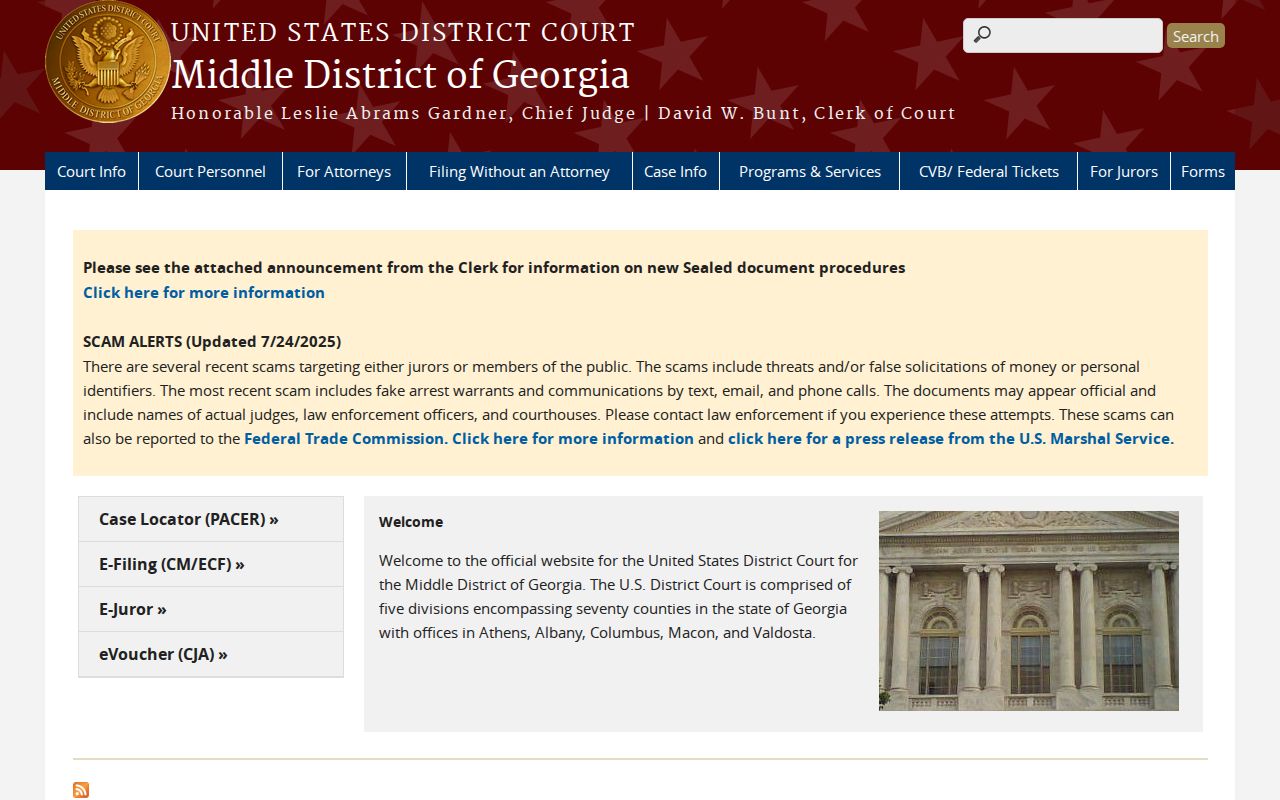
That federal route does not replace the East Elm clerk for Georgia felony cases filed in Johnson County.
PACER’s official access page shows the national docket channel used for those cases.
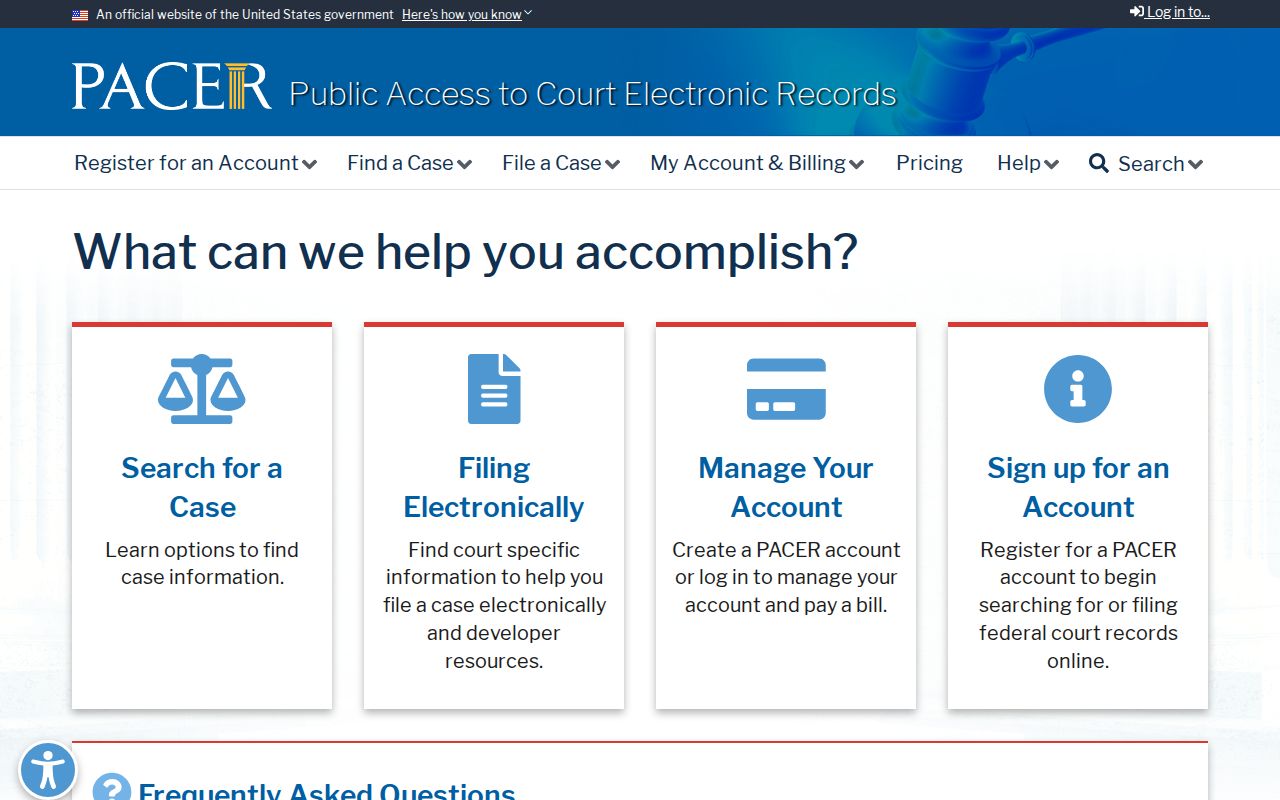
Use the correct court name and party details to avoid confusing a federal docket with a state case.
Case Record Access and Restrictions
Georgia court records are generally open, but access is not absolute. Juvenile material, sealed records, protected victim or minor data, personal identifiers, and information covered by a valid court order may be withheld or redacted. Record restriction under O.C.G.A. § 35-3-37 limits eligible arrest-history dissemination, while a separate sealing order may be needed for court documents.
The GSCCCA Johnson profile is another official way to confirm the correct clerk before requesting access.
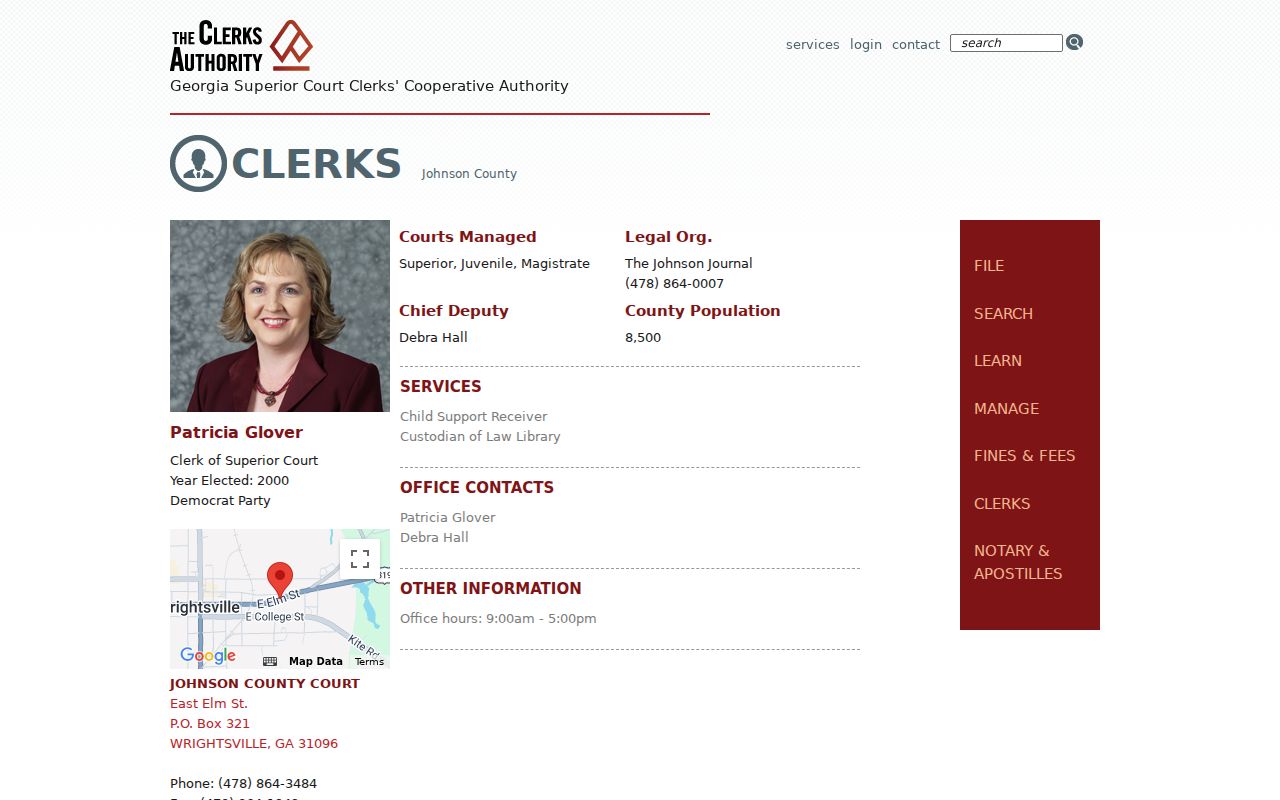
The profile supports office routing, but it is not itself a searchable criminal docket.
If a name search yields nothing, ask whether the matter is pending filing, archived, juvenile, sealed, or held by a municipal court. Absence from an online directory is not proof that no case exists.